 |
|
|

| Home -> Products & Services -> GPCR Solutions | ||
| Quick Inquiry |
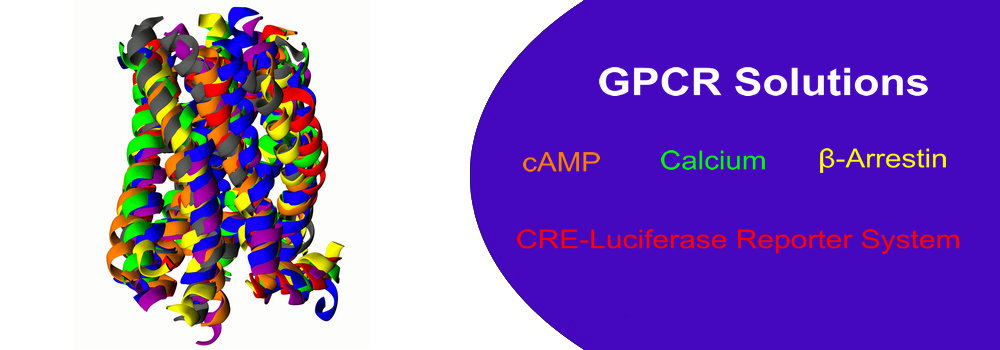
GPCR Solutions To assist researchers and drug development institutions worldwide in making breakthroughs in GPCR research, RGBiotech has launched a comprehensive range of GPCR expression vector products and provided professional personalized construction services for various research needs. Whether you need to construct specific mutants, fuse special tags, or develop vectors for rare GPCRs, our professional team will, with rich experience and advanced technical platforms, customize solutions for you to ensure the smooth progress of experiments. GPCR expression plasmid vectors for expressing native full length GPCR
GPCR expression plasmid vectors for bioluminescence-based β-arrestin recruitment assay
GPCR expression plasmid vectors for fluorescence-based β-arrestin recruitment assay
GPCR expression plasmid vectors for SNAP-based internalization assay
GPCR expression plasmid vectors for CRE-Luc-based cAMP assay
GPCR helper plasmid vector_CRE-Luc reporter system
Our GPCR expression vector systems have been used by hundreds of laboratories and pharmaceutical companies worldwide for basic research and drug development. For more details, please contact us at admin@rgbiotech.com. Read More G protein-coupled receptors (GPCRs) are the largest family of membrane protein receptors in the human body and play a critical role in cellular signal transduction. The human genome encodes approximately 800 GPCRs, which regulate nearly all physiological processes, including vision, olfaction, taste, neurotransmission, immune responses, and hormonal regulation. In the field of life sciences, GPCRs have always been a hot topic in scientific research and drug development. GPCR has a unique structure consisting of a polypeptide chain containing seven transmembrane α-helical domains. GPCR is composed of extracellular N-terminus (ligand-binding domain), seven transmembrane domains, intracellular C-terminus (G protein-coupling domain). This special structure enables them to recognize and bind to a variety of ligands, including hormones, neurotransmitters, chemokines, etc., thereby activating intracellular G proteins or β-arrestin and initiating complex signal transduction pathways. The signal transduction of GPCRs is mediated via heterotrimeric G proteins (α, β, γ subunits). Dysfunctions of GPCRs are closely related to a variety of diseases, such as Cardiovascular diseases (hypertension, heart failure), Neurological disorders (Parkinson’s disease, Alzheimer’s disease, schizophrenia), Metabolic disorders (diabetes, obesity), Cancer, Inflammatory and autoimmune diseases, etc. For example, the dysregulation of β-adrenergic receptors is closely associated with cardiovascular diseases such as hypertension and heart failure; and the abnormalities of the serotonin receptor family are closely related to mental diseases such as depression and anxiety. GPCR Classification Based on sequence homology and functional characteristics, GPCRs are mainly divided into six major classes:1) Class A (Rhodopsin-like): The largest class covers most receptors that bind to hormones, neurotransmitters and so on, for example, adrenergic receptors, dopamine receptors, etc. 2) Class B (Secretin receptor family): This class mainly responds to peptide hormones and includes glucagon receptors, GIP receptors, etc. 3) Class C (Metabotropic glutamate receptor family): Includes metabotropic glutamate receptors (mGluRs), γ-aminobutyric acid type B (GABAb) receptors, etc. 4) Class D (Fungal mating pheromone receptors) 5) Class E (Cyclic AMP receptors): This class is also known as orphan receptors. 6) Class F: This class is related to frizzled proteins and smoothened proteins. GPCR Function Detection When studying the functions of GPCRs at the in vitro cellular level, a variety of detection methods are widely used:1) cAMP Detection: When a GPCR binds to a ligand, if the Gs protein is activated, it will promote the activity of adenylate cyclase (AC), leading to an increase in the intracellular cAMP level; conversely, the activation of the Gi protein will inhibit the AC activity and decrease the cAMP level. Quantitative detection of cAMP content can be achieved through techniques such as ELISA and Fluorescence Resonance Energy Transfer (FRET), thereby reflecting the activation state of GPCRs. 2) Calcium Signal Detection: After the activation of some GPCRs, through the Phospholipase C (PLC)-Inositol Triphosphate (IP3) pathway, the intracellular calcium stores will release calcium ions, resulting in an increase in the intracellular calcium ion concentration. Real-time monitoring of changes in intracellular calcium signals can be carried out using calcium-sensitive fluorescent probes such as Fura-2 and Fluo-3 in combination with fluorescence microscopy or flow cytometry. 3) β-arrestin Detection: After the activation of GPCRs, in addition to activating G proteins, β-arrestin can also be recruited, triggering processes such as receptor endocytosis and desensitization. Based on technologies such as BRET (Bioluminescence Resonance Energy Transfer) or FRET, fluorescent or luminescent tag-fused β-arrestin and GPCR fusion proteins can be constructed to detect the interaction between them and evaluate the activation of GPCRs. 4) SNAP Detection: The SNAP-tag is a small molecule protein tag that can specifically bind to its substrate. By fusing the SNAP-tag to a GPCR, real-time monitoring of the localization, trafficking, and functional dynamic changes of the GPCR can be achieved through labeling with fluorescent or biotinylated substrates. 5) CRE response element luciferase reporter system (CRE-Luc reporter system): The cAMP response element (CRE) is a cis-acting element present in the promoter regions of many genes. When the GPCR is activated and the cAMP level increases, Protein Kinase A (PKA) is activated, which then phosphorylates the CRE-binding protein (CREB), enabling it to bind to the CRE and initiate the expression of downstream reporter genes (such as the luciferase gene). By detecting the activity of luciferase, the activation degree of the cAMP signaling pathway after GPCR activation can be indirectly reflected. |
|
|
Products & Services Resources | ||
|
Home Products & Services Support About Us Contact Us |
Promotions Flyers Brochures Publications News & Events |
Terms & Conditions Privacy Disclaimers |
Contact Us EMAIL: admin@rgbiotech.com |
||
| © RGBiotech All Rights Reserved. | |||||